
Jaw tension can interfere with normal life. It can make chewing feel tiring, sleep feel less restful, and your face feel tight before the day really begins. For some Renew MD patients, jaw clenching also brings tension headaches or a heavy feeling through the jaw.
Our EmFace TMJ treatment in Southlake, TX, gives patients a non-invasive option for relieving jaw tension, clenching, and TMJ-related discomfort.
Why TMJ Tension Feels So Draining
The temporomandibular joint connects your jaw to your skull. When the muscles around that joint become tight or overactive, simple movements start to feel harder than they should.
Patients dealing with TMJ tension often notice:
- Jaw clenching
- Facial tightness
- Tension headaches
- A heavy feeling in the jaw
- Soreness while chewing
- Limited or uncomfortable jaw movement
That discomfort rarely feels like “just a jaw problem.” It can affect how your face looks, how you sleep, and how comfortable you feel throughout the day.
How EmFace Works for TMJ
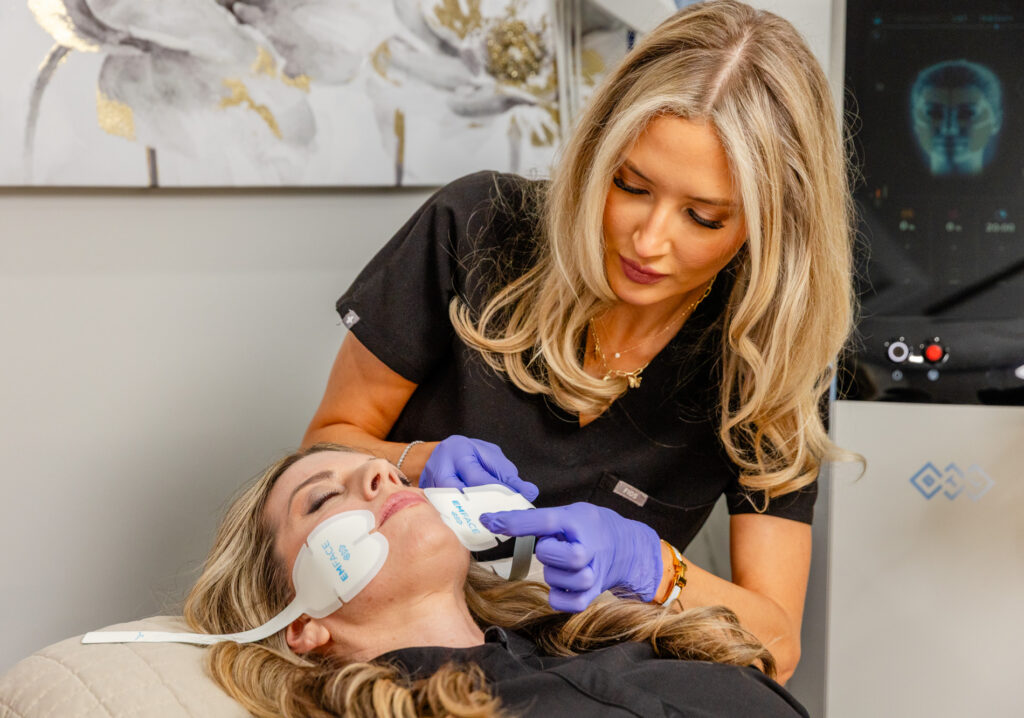
At Renew MD Facial Aesthetics, our EmFace system uses synchronized radiofrequency (RF) energy and high-intensity facial electrical stimulation (HIFES) technology to support jaw muscle function while also helping tone the face.
| Technology | What It Does | Why It Matters |
| RF Energy | Warms deeper tissue in the jaw and cheek area | Supports circulation and helps ease muscle tension |
| HIFES | Creates strong facial muscle contractions | Supports muscle balance and jaw movement |
| Facial Applicators | Deliver treatment through the skin | Keeps the session needle-free and hands-free |
This combination lets EmFace address muscle behavior without injections. For patients who want a noninvasive approach, EmFace TMJ treatment in Southlake offers a different path than traditional injectable options.
What an EmFace Session Feels Like
An EmFace session usually takes about 20 to 30 minutes. You’ll relax while applicators rest on your face. The treatment creates warmth and rhythmic muscle contractions that many patients describe as a warm facial massage with muscle activation. There is no anesthetic, no needles, and no required downtime.
A standard plan usually includes 4 to 6 sessions, spaced about 1 week apart. Some patients notice changes within 2 weeks, while the full effect continues building through the treatment series.
EmFace vs. Botox for TMJ
Botox and EmFace both address TMJ-related muscle tension, but they work in different ways.
- Botox temporarily relaxes targeted muscles, including the masseter muscles. This can reduce clenching force and soften tension in the lower face.
- EmFace focuses on muscle re-education and remodeling. It uses facial stimulation and RF warmth instead of needles. That makes it a strong option for patients who want jaw support without injectable treatment.
Here’s the simpler way to think about it:
- Botox relaxes targeted muscle movement
- EmFace activates and rebalances facial muscles
- Both options require a provider-guided plan
The right choice depends on your symptoms, anatomy, and treatment history.

EmFace TMJ FAQs
Considering EmFace for jaw tension or TMJ-related discomfort? These FAQs answer the practical questions patients often have to better understand treatment timing, comfort, downtime, and how EmFace compares with other options.
How is EmFace used for TMJ concerns?
We use EmFace for TMJ concerns by targeting the facial and jaw muscles involved in tension and clenching. RF energy warms deeper tissues, while HIFES creates muscle contractions. Together, these technologies support circulation, muscle balance, and smoother jaw movement without needles.
Is there downtime after EmFace TMJ treatment?
No, EmFace does not require downtime. Most patients return to normal routines after treatment. You may feel warmth or muscle activity during the session, but you won’t need anesthesia or recovery time. Your provider will explain what to expect before your first visit.
Who Might Be a Good Fit?
EmFace may be a good fit if you deal with jaw tension, clenching, or TMJ-related discomfort and want a noninvasive option. It may also appeal to patients who want facial toning benefits as part of their treatment plan.
EmFace is not right for everyone. It is not recommended for patients who are pregnant or have certain metal implants. It also may not be right if you have recent surgery in the treatment area, facial piercings, active skin infections, recent sunburn, or have used isotretinoin within the last 12 months.
Start With a Clear Plan
Jaw tension can affect more than your jaw. If clenching, tightness, or TMJ discomfort has become part of your daily routine, you deserve a plan that feels clear and thoughtful.
Renew MD Facial Aesthetics offers EmFace TMJ treatment in Southlake for patients who want a noninvasive option that addresses facial muscle function without needles or downtime. Our team will help you understand whether EmFace, Botox, or another path fits your needs best.

